Key Takeaways
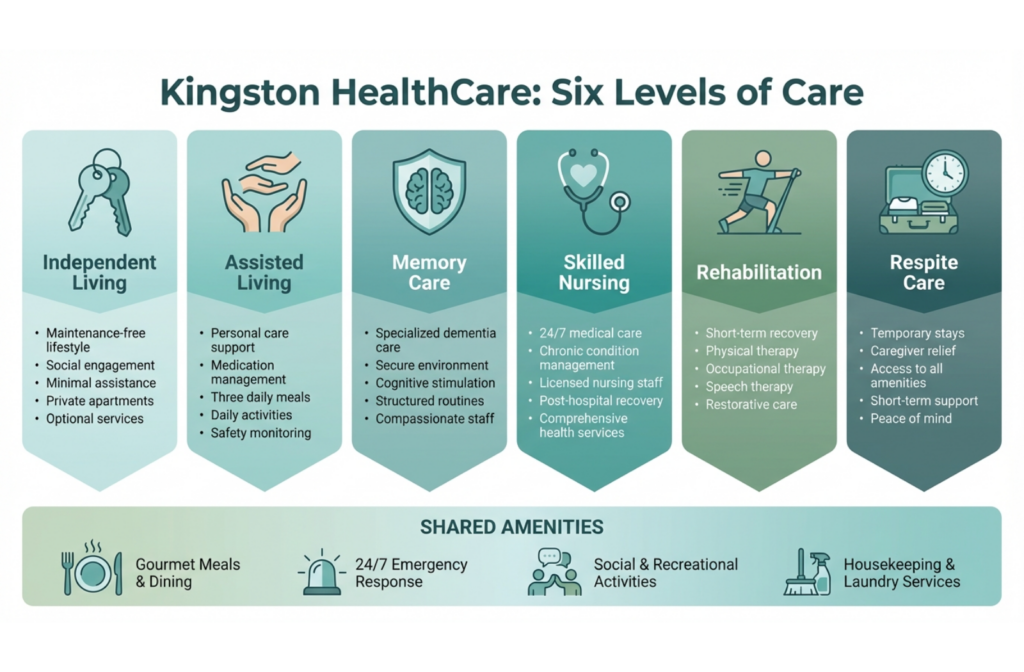
- Kingston HealthCare offers 6 levels of care: independent living, assisted living, memory care, skilled nursing, rehabilitation, and respite care
- Each level provides 24/7 support with personalized care plans that adapt to your changing needs
- All communities include meals, amenities, and emergency response in your monthly investment
- You can transition between care levels within the same community as your needs evolve
- Respite care offers short-term stays for trial experiences or caregiver relief
Finding the right level of care for yourself or a loved one can be a big decision. You want enough support to feel secure while keeping as much independence as possible. Many communities across Ohio, New Mexico, Indiana, and North Carolina offer a full range of options to help you age in place comfortably.
The six main levels of care include independent living, assisted living, memory care, rehabilitation, skilled nursing, and respite care. Each offers 24/7 support with personalized care plans. Independent and assisted living focus on daily support, memory care provides structure for cognitive needs, and skilled nursing delivers advanced medical care. Rehabilitation supports recovery, while respite care offers short-term stays for rest or trial experiences.
What’s the Difference Between Independent Living and Assisted Living?
Independent living works well if you’re ready to downsize but don’t need daily personal care assistance. You’ll enjoy maintenance-free living with access to social activities, nutritious meals, and 24/7 support when you need it. This option gives you the freedom to come and go as you please while having peace of mind that help is always available.
Assisted living provides more hands-on support with daily activities like bathing, dressing, and medication management. Your care team creates a personalized plan that can adapt as your needs change. You’ll receive help with personal care while still maintaining your independence and privacy.
Both options include housekeeping services, prepared meals, transportation, and recreational activities. The main difference is the level of personal care support you receive each day.
What Is Memory Care and How Does It Support Cognitive Health?
Memory care neighborhoods provide a secure, supportive environment designed specifically for people living with dementia, Alzheimer’s, and related conditions. These specialized areas feature safety measures and programming that help residents feel comfortable and engaged.
Your loved one will receive personalized attention from associates trained in memory care approaches. The daily activities and therapies focus on maintaining cognitive function and supporting emotional well-being. Families stay involved through regular communication, educational resources, and flexible visiting policies.
The neighborhood design includes familiar spaces and clear pathways that reduce confusion while encouraging safe movement and social interaction.
What’s the Difference Between Skilled Nursing and Rehabilitation Care?
Skilled nursing provides 24-hour medical care for residents with complex health needs. You’ll have access to registered nurses, physical therapists, and other healthcare professionals who work together to support your health and comfort.
Rehabilitation services help you recover from surgery, illness, or injury through physical, occupational, and speech therapy programs. These short-term stays focus on helping you regain strength and independence so you can return home or transition to a lower level of care.
Both options include coordination with your physicians and access to modern medical equipment. Your care team develops individualized treatment plans based on your specific health goals and needs.
How Do Costs and Services Vary Across Senior Care Levels?
Your monthly investment includes accommodation, meals, 24/7 support, emergency response, and access to community amenities across all care levels. Additional services like beauty treatments, fitness programs, and specialized therapies are available based on your preferences and needs.
The culinary teams can even prepare your family recipes and accommodate special dietary needs, helping you feel at home while receiving the care and support you deserve. Each community offers convenient amenities designed to make life easier, safer, and more enjoyable for every resident.
What Is Respite Care and When Is a Short-Term Stay the Right Choice?
Respite care offers short-term stays from a few days to several weeks. This option provides relief for family caregivers who need a break or want to travel. It also gives you a chance to experience community living before making a long-term decision.
During your respite stay, you’ll receive the same level of personalized care and attention as long-term residents. This helps you get a true feel for the community culture and see how the 24/7 support can benefit your daily life.
Find Your Right Fit with Kingston HealthCare
Kingston HealthCare’s 30-year commitment to personalized care means you’ll receive support that adapts to your changing needs. The continuum of care approach allows you to transition between levels of support within the same community, maintaining relationships and familiarity.
When you’re ready to explore your options, the Kingston team will help guide your decision-making process. You can tour communities, ask questions about specific services, and see firsthand how each level of care can support your lifestyle and health needs.
Contact Kingston HealthCare today to schedule a visit and discover which level of care is the right fit for your family’s senior living journey.